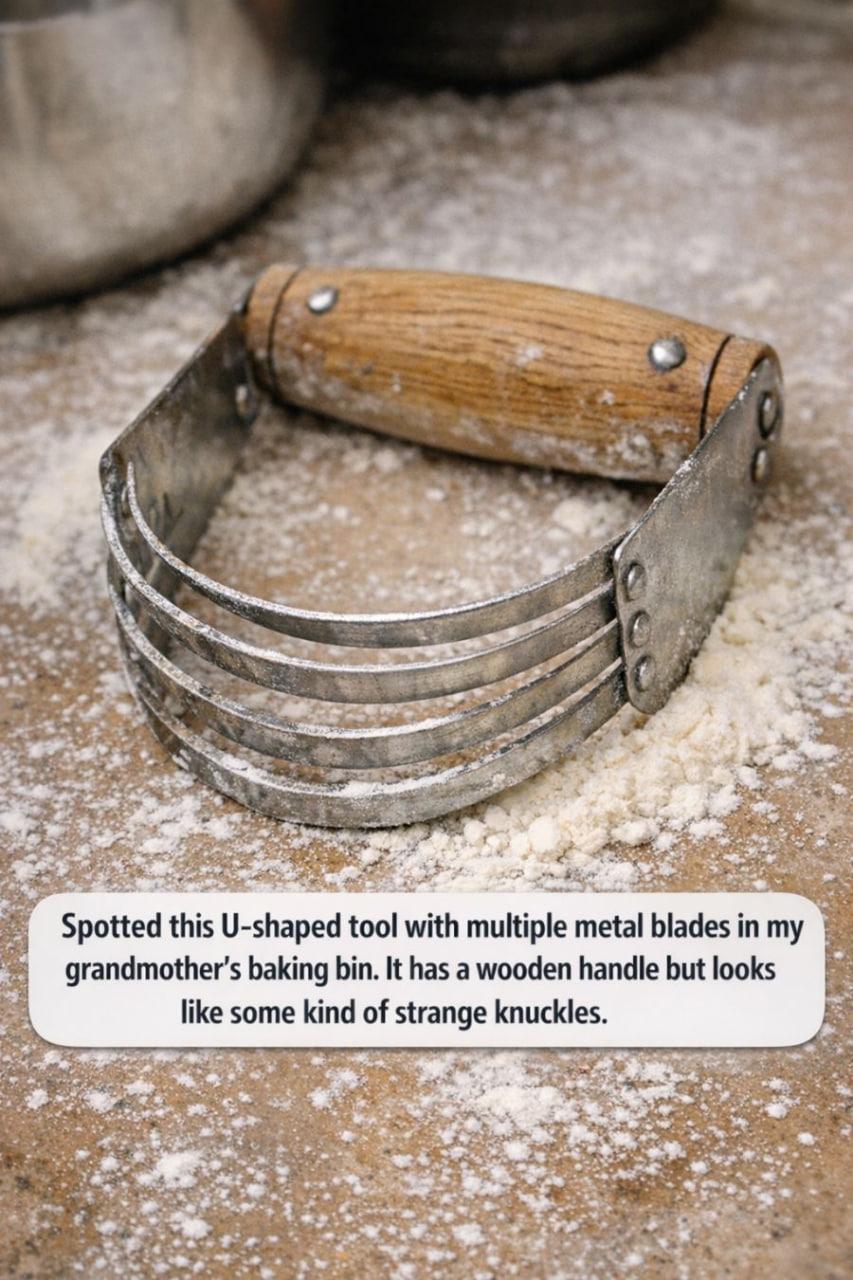
This method helps inhibit gluten formation, which occurs when flour and liquid are mixed. By limiting gluten development, pastries remain tender and crumbly rather than tough. The pastry blender’s design allows for quick and uniform cutting while preventing the butter from melting due to the warmth of your hands.
4. Why the Handle Is Wood and the Blades Are Metal
The choice of materials in a pastry blender is both practical and traditional. Wood is often used for the handle because it is durable and comfortable to hold. It also doesn’t conduct heat or cold as much as metal, making it pleasant to grip during extended use.
The blades, typically stainless steel, are chosen for their strength and resistance to rust. While they aren’t sharpened like knives, the sturdy edges allow the tool to cut through cold, firm butter without bending or breaking.
5. Pastry Blender vs. Knuckle Duster: Clearing Up the Confusion