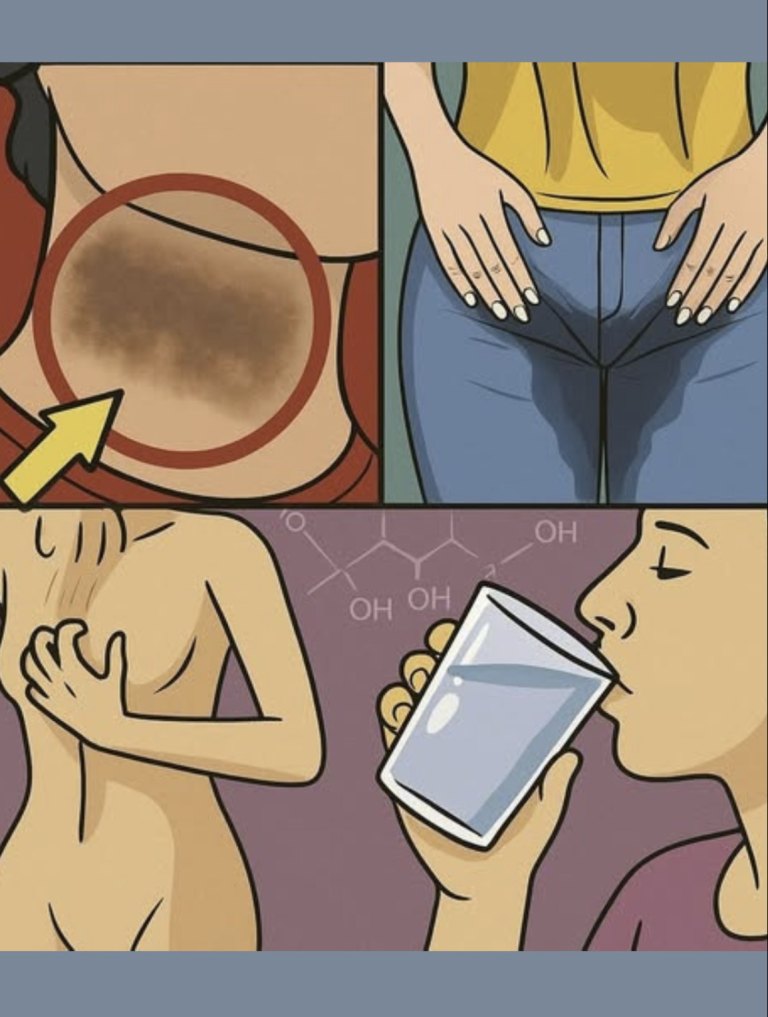
1. Your Skin Is Behaving Badly
Blemishes? Dull complexion? Dark spots on your neck or underarms?
It could be acanthosis nigricans – a velvety, dark discoloration often associated with insulin resistance, a precursor to type 2 diabetes. It's your body's way of saying, "We're overwhelmed with sugar. We can't process it effectively anymore."
Even without this specific condition, high blood sugar levels cause insulin to spike, which in turn increases sebum production and inflammation—aka acne.
👉 What helps: Limit your intake of refined sugar. Eat more vegetables high in fiber, healthy fats, and protein to stabilize your blood sugar.
🚩 2. You're Thirsty. All the Time.
Drinking plenty of water… but still feeling thirsty?
Excess sugar draws fluid from your tissues, forcing your kidneys to work overtime to filter it out. This leads to frequent urination—and, consequently, constant thirst.
It's a cycle: more sugar → more urine → more dehydration → more thirst.
💡 Science says: When blood sugar is high, your body draws water from your cells to dilute it. That's why you feel dry, tired, and constantly reaching for the bottle.
👉 Try this: Swap one sugary drink a day for herbal tea or water with lemon and mint. Small change, big effect.
🚩 3. You're gaining weight, especially around your belly
Unexplained weight gain, especially stubborn belly fat, is often linked to high insulin levels caused by too much sugar.
Fructose (found in table sugar and high-fructose corn syrup) is processed in the liver. When overloaded, the liver converts it into fat – often accumulating around the organs (visceral fat), which is linked to heart disease and metabolic problems.
👉 Good news: You don't need perfection. Simply limiting liquid sugars (soda, juice, sweetened coffee) can make a noticeable difference within a few weeks.
🚩 4. Your energy plummets like a dead phone battery
After lunch, you're elated… and then suddenly, at 3:00 PM, you're lying facedown on your desk.
This rollercoaster—the spike, the crash, the craving, the repeat—is a classic blood sugar drama.
Sugar provides a quick boost of energy, but the body responds with a surge of insulin, causing a rapid drop in insulin levels. The result? Fatigue, brain fog, irritability.
👉 Fix it: Pair carbs with protein or fat (e.g., apple + almond butter). It slows down absorption. It helps you pass food.
🚩 5. You're always hungry (even after eating)
If after a meal you think, "I'll eat again in 20 minutes," sugar can hijack your hunger hormones.
High sugar consumption can lead to leptin resistance—your brain stops hearing the "I'm full" signal. So you keep eating even when you don't need to.
👉 Gentle solution: Focus on whole foods—vegetables, legumes, nuts, and seeds. They keep you feeling full longer and naturally stabilize your appetite.
🚩 6. You're in a bad mood or anxious
Yes, sugar affects your mood.
Research shows that a high-sugar diet is associated with an increased risk of anxiety, depression, and mood swings. Why? Fluctuating blood sugar levels disrupt the function of neurotransmitters like serotonin and dopamine.
Furthermore, sugar fuels inflammation, which not only harms your joints. It also harms your brain.
👉 Try this: Add omega-3 fatty acids (salmon, walnuts, flaxseeds) and magnesium-rich foods (spinach, pumpkin seeds) to your diet to help you stay calm.
🚩 7. Clothes feel tighter... but you haven't changed your diet
Wait—you haven't changed your diet?
Think again. Hidden sugars are everywhere:
→ Ketchup
→ Cereal bars
→ “Healthy” yogurt
→ Salad dressings
→ Even so-called “low-fat” meals (which have sugar added for flavor)
These “hidden sugars” add up quickly—sometimes exceeding 70 grams a day without you even realizing it.
👉 Tip: Check labels. If “sugar,” “syrup,” or anything ending in “ose” is at the top of the list, consider switching.
🚩 8. You crave sugar so much it’s like it’s calling your name
The ultimate sign:
You know you should cut back…
But that cookie? That soda? That ice cream?
It seems urgent.
This isn’t a sign of a loss of willpower.
It’s a sugar addiction.
Studies show that sugar activates the same reward centers in the brain as some drugs. The more you eat, the more you crave.
👉 Be kind to yourself. It's not a weakness. It's biology. And it can be restored—with time and care.
🌿 What you can do (without suddenly quitting)
You don't have to give up sugar completely. However, you can create space for more energy, clearer skin, and a better mood.
✅ Zac