sites
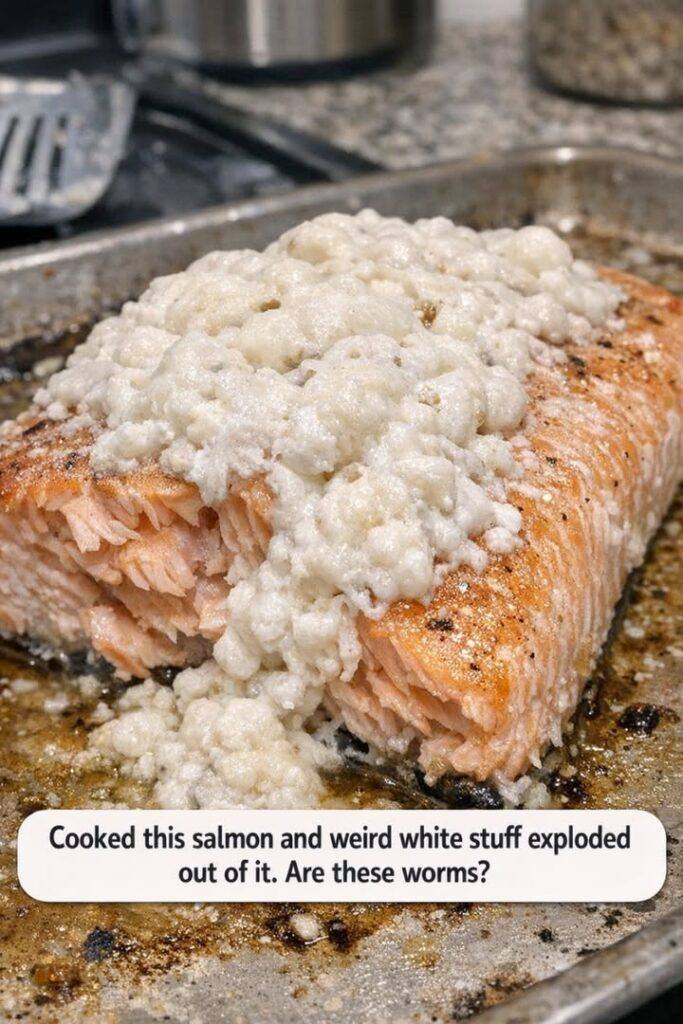
Distinguishing albumin from worms or parasites is relatively straightforward. Albumin appears as a white, gelatinous substance on the surface of the cooked salmon, often forming a thin layer or small blobs. It is smooth and consistent in texture.
Worms or parasites, on the other hand, are usually more thread-like or segmented and may have a distinct shape or movement if they are still alive. If you ever encounter something that resembles a worm in your salmon, it is advisable to inspect it closely and consult a seafood expert if you're unsure.
4. When White Stuff Is A Red Flag: Signs Your Salmon Isn’t Safe
While albumin itself is not a cause for concern, there are other signs that indicate your salmon might not be safe to eat. Check for an off-putting smell, a slimy texture, or discoloration, which are indicators of spoilage.
If the salmon has a strong, fishy odor or appears dull and grey instead of vibrant and pink, it may be past its prime. Additionally, ensure that the fish is stored properly at temperatures below 40°F to prevent bacterial growth.
5. Why Some Salmon Leak More Albumin Than Others
The amount of albumin that leaks from salmon can vary based on several factors, including the type of salmon, its freshness, and the method of cooking. Wild salmon, which has less fat compared to farmed salmon, often releases more albumin as the protein content is higher relative to fat.
Freshness also plays a role; fresher salmon tends to have firmer muscle fibers that hold albumin more effectively until cooking. Cooking techniques that involve lower temperatures can also reduce the amount of albumin released.