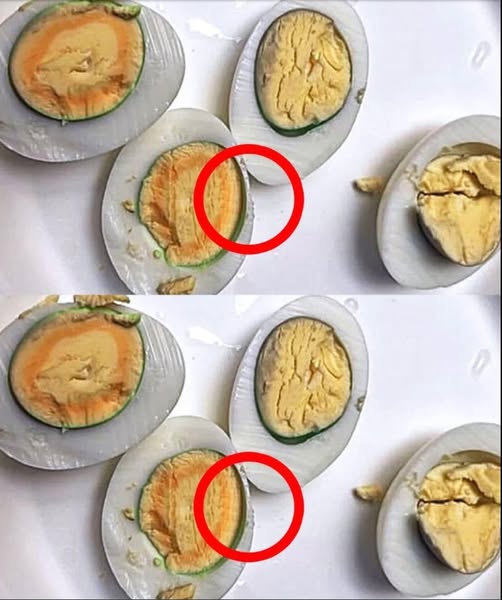
**Large Eggs**
**Total Cooking Time: 10-11 Minutes**
That's it.
Anything beyond that—especially vigorous cooking for 12-15 minutes—is when the green ring almost always appears.
But the method matters as much as the minutes.
—
## The Best Way to Avoid the Green Ring (Step by Step)
Many people "cook" eggs incorrectly—by constantly cooking them in rapidly boiling water. This is a recipe for overcooked yolks.
Here's a gentler and more reliable method.
### Step 1: Start with Cold Water
Place the eggs in a single layer in a saucepan and cover them with about an inch of cold water.
Why it's important:
* Gradual heating prevents temperature shocks
* Eggs cook more evenly
### Step 2: Bring to a boil, then stop
Bring the water to a **full boil**.
As soon as it reaches a boil:
* Turn off the heat
* Cover the pan with a lid
### Step 3: Let the eggs cool (this is the "cooking" time)
Leave the eggs in the hot water for:
* **10 minutes** for slightly creamy but fully set yolks
* **11 minutes** for fully set yolks
Do not boil during this time.
### Step 4: Instant Ice Bath
Transfer the eggs to an ice bath or very cold water for at least **5 minutes**.
This serves two purposes:
* It stops cooking immediately
* It prevents the iron from reacting with sulfur, which causes the green ring
—
## Why overcooking is the real culprit
It's not just *how long* you cook your eggs, but also **how much heat you expose them to**.
Aggressively cooking eggs for too long:
* It raises the internal temperature too high
* It forces sulfur out of the whites
* It drives iron toward the edge of the yolk
The effect? That unmistakable green halo.
Once the ring forms, it can't be reversed—however, stopping cooking before the end completely prevents it from forming.
—
## Egg size matters more than you think
The time depends on the size of the egg:
* **Medium-sized eggs**: 9–10 minutes
* **Large-sized eggs**: 10–11 minutes
* **Extra-large eggs**: 11–12 minutes
If you use farm-raised or very fresh eggs, they may take a little longer to cook, but the difference is usually less than a minute.
It's better to choose a shorter cooking time and use an ice bath.
—
## Does the freshness of the eggs affect the green ring?
Not directly.
**Peeling ability** is affected by freshness, not the green ring.
* Very fresh eggs are harder to peel
* Older eggs peel more easily
However, in both cases, if they are overcooked, green rings may appear.
If you want them to spread easily *and* have the perfect color:
* Use eggs that are a week or two old
* Cool them quickly after cooking
—
## An ice bath is not optional
One of the biggest mistakes people make is skipping the ice bath.
Even after removing the eggs from the hot water, they continue to cook inside for a few minutes. This residual heat is enough for the eggs to reach the green ring level.
Cold water:
* Stops the cooking process
* Maintains color and texture
* Makes peeling easier
Five minutes minimum. Ten minutes is even better.
—
## What about soft-boiled eggs and jam?
The good news: soft-boiled eggs don't have green rings.
Why?
Because the yolk never gets hot enough for the iron-sulfur reaction to occur.
Approximate time:
* **Soft-boiled**: 6–7 minutes
* **With jam**: 7.5–8.5 minutes
They are naturally resistant to green rings, but the timing of their development is crucial to texture.
—
## Popular Myths About the Green Ring
### Myth 1: A green ring means the egg is spoiled
False. It's completely safe to eat.
### Myth 2: You can fix it by peeling the skin differently.
No. The color is in the yolk.
### Myth 3: Adding salt or vinegar prevents
Salt and vinegar help with cracking and peeling of the skin, not the internal chemistry.
### Myth 4: Only old eggs have green rings
Fresh eggs can also develop green rings if overcooked.
—
## What Professional Kitchens Do Differently
Professional kitchens obsess over two things:
* Time
* Temperature control
Many chefs:
* Steam eggs instead of boiling them in water
* Use timers accurate to the second
* Place eggs in ice water immediately
Steaming eggs (12-13 minutes) often yields even better results because they are easier to peel and don't leave a green ring. However, boiling works perfectly if done correctly.
—
## If you've already overcooked them...
Don't panic.
Eggs with a green ring are still:
* Nutritious
* Safe
* Perfect for egg salads, stir-fries, or sandwiches
They simply won't win beauty contests.
They can be sliced, crushed, or