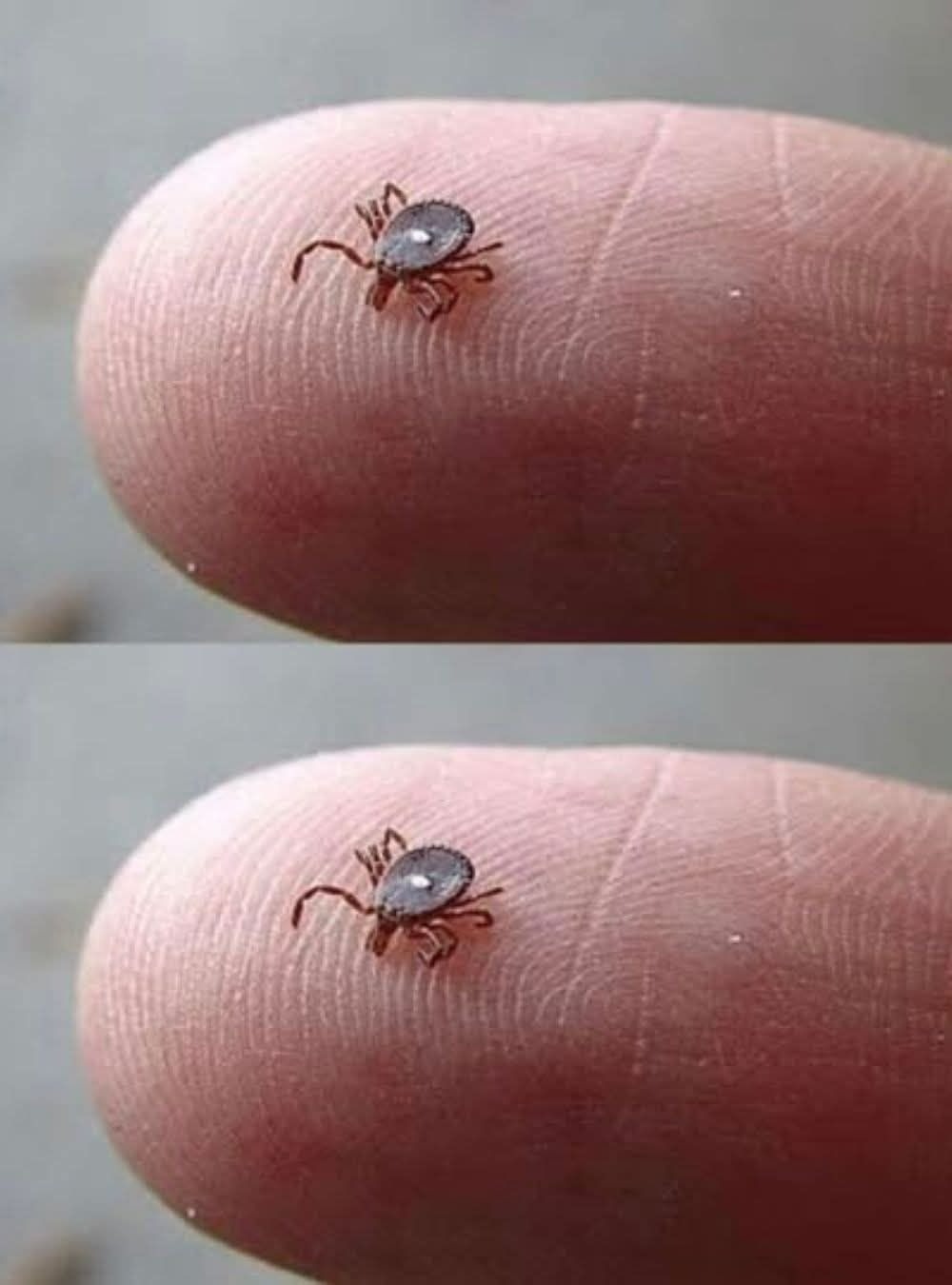
First, Identify What You’re Dealing With
Ticks are small arachnids that feed on blood. They’re most active in warm months but can appear anytime temperatures are above freezing. Different species carry different risks, so knowing what you’re dealing with helps.
Common tick species in North America:
Tick Species Distinctive Features Common Diseases
Black-legged tick (deer tick) Reddish-brown body, dark legs Lyme disease, anaplasmosis
Lone star tick Females have single white spot on back Ehrlichiosis, STARI, alpha-gal syndrome
American dog tick Brown with whitish markings Rocky Mountain spotted fever, tularemia
Brown dog tick Uniform reddish-brown Rocky Mountain spotted fever (rare)
The lone star tick mentioned in the story is easily identified by the distinctive single white spot on the back of adult females. It’s aggressive, fast-moving, and has been linked to a unusual allergy to red meat (alpha-gal syndrome).
Step 1: Remove the Tick Properly (The Right Way)
This is the most critical step. How you remove the tick affects your risk of disease transmission.
What you’ll need:
Fine-tipped tweezers (not blunt ones)
Rubbing alcohol
Soap and water
A small container or ziplock bag (optional, for identification)
The correct removal method:
Grasp close to the skin. Using fine-tipped tweezers, grasp the tick as close to the skin’s surface as possible. Get right at the mouthparts—don’t grab the body.
Pull upward with steady, even pressure. Don’t twist or jerk. This can cause the mouthparts to break off and remain in the skin. Steady, gentle pressure is key.
Don’t squeeze or crush the tick’s body. Squeezing can force infected fluids back into the bite.
Clean the bite area thoroughly. Wash with soap and water, then apply rubbing alcohol or an antiseptic.
Save the tick if possible. Place it in a small container or ziplock bag with a damp cotton ball. If you develop symptoms later, having the tick for identification can be valuable.