Place near an east or west-facing window.
Leaves should be olive green—dark green = too little light; red-tinged = too much.
🌡️ 2. A Temperature Drop
10–15°F (5–8°C) cooler at night for 2–3 weeks mimics dry-season conditions that trigger bloom spikes.
Example: 75°F (24°C) days → 60–65°F (15–18°C) nights.
💧 3. Proper Watering
Water only when roots turn silvery-white (not green).
Soak thoroughly, then let drain completely—never let orchids sit in water.
🌱 4. Fertilize Strategically
Use a balanced orchid fertilizer (20-20-20) at ¼ strength, once a week during growing season (spring/summer).
In early fall, switch to a high-phosphorus formula (10-30-20) to encourage bloom spikes.
🪴 5. Healthy Roots & Fresh Medium
Repot every 1–2 years in fresh orchid bark (not soil!).
Roots need airflow—compacted or soggy medium = no blooms.
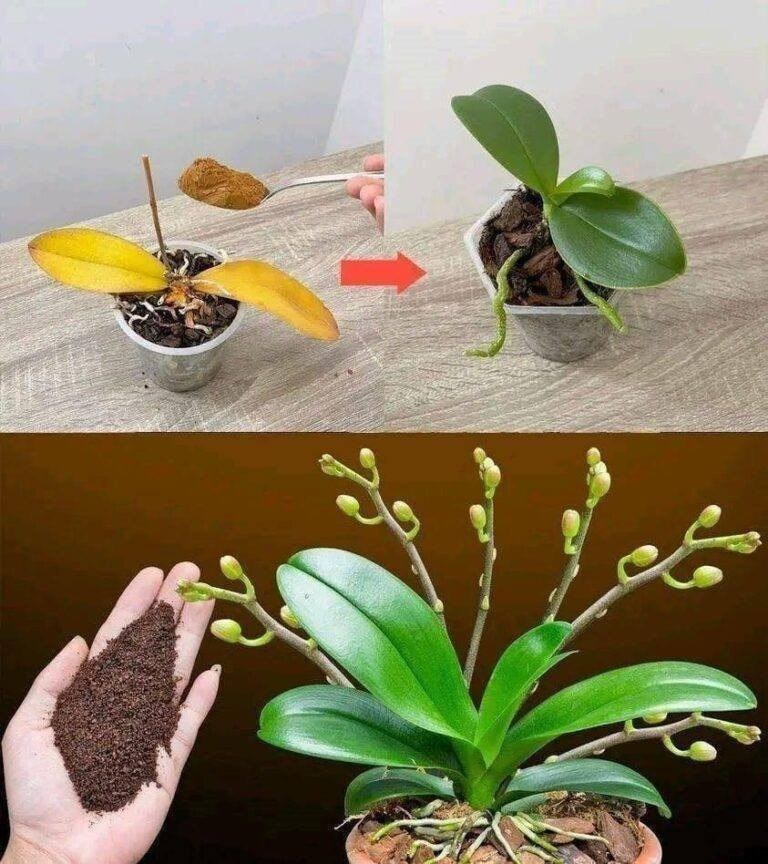
💡 The Only “Teaspoon” That Might Help (Rarely)
If your tap water is very soft or your orchid shows yellowing between leaf veins (magnesium deficiency), you can use:
½ tsp Epsom salt per gallon of water, applied once every 2–3 months.
But for most growers, this is unnecessary—orchid fertilizers already contain balanced micronutrients.
Discover more
Flower
Orchids