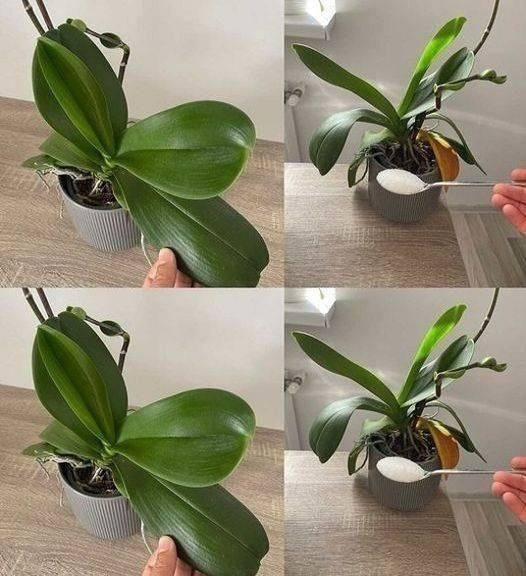
According to this My Flowers specialist interviewed by Express, the diagnosis is clear: "Orchids are known for their delicate and elegant aesthetics, but they can also be capricious when it comes to flowering. Most of the time, this lack of blooms stems from three common mistakes." He then reassures discouraged owners: "By avoiding these common errors, you can ensure your orchid is healthy and vigorous, and when it is, you have a much better chance of being rewarded with magnificent flowers that last all season."
Mistake #1: Treating your orchid like a houseplant.
The first mistake is watering. "Overwatering or underwatering can put your orchid under enormous stress, meaning it won't bloom." In spring and summer, one or two soakings per week are sufficient, compared to every 10 to 15 days in winter, allowing the potting mix to dry out completely, without letting water stagnate. The expert adds: "It's important to use room temperature water and avoid the ice cube trick (placing an ice cube on the potting mix instead of watering) because you'll shock these tropical plants." Using soft water also reduces the risk of disease.
Yellow, limp leaves and brown, spongy roots indicate root rot caused by overwatering. Conversely, shriveled leaves and gray roots suggest underwatering. A slight watering deficit is preferable; in winter, two waterings per month are sufficient.
Mistake #2: Incorrect lighting and drafty rooms.
Light plays a key role in encouraging an orchid to rebloom. "This is because many orchid varieties need bright but indirect light. Too much direct sunlight can burn the leaves, but too little light inhibits flower production," explains Igor Podyablonskiy. He adds, "Remember, orchids need a period of darkness to rest, so they shouldn't be kept under artificial light for too long." Orchids thrive in bright, indirect light near an east- or southeast-facing window, not in a dark room or in direct sunlight behind a window.
Another common mistake is placing them in a drafty location or too close to a radiator. These tropical plants ideally thrive between 18 and 22°C; a front door, a poorly insulated window, or a convector heater will dry out the buds and can cause black spots on the leaves.
continued on the next page