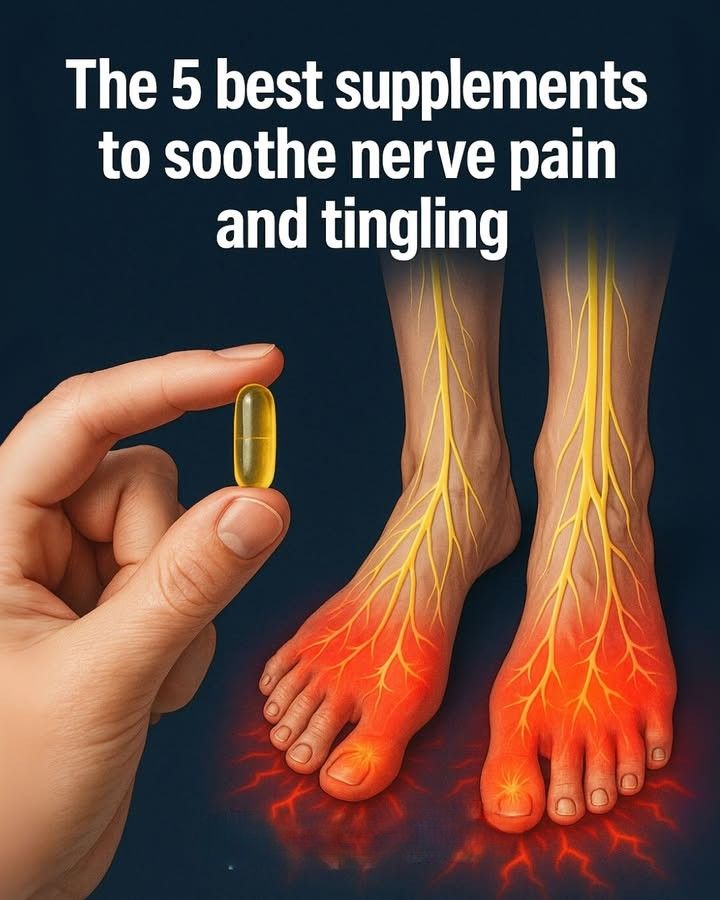
If you want to get the benefits of curcumin, simply adding more turmeric to your food probably won’t be enough. Turmeric spice is only about 3% curcumin by weight, so it’s very difficult to eat enough to reach the concentrations used in clinical trials. This is where supplements come in. When you choose a curcumin supplement, make sure it includes piperine (an extract from black pepper, often listed as BioPerine). Piperine is crucial because it increases your body’s absorption of curcumin by an incredible 2,000%! Without it, most of the curcumin will pass through your body without being used. Dosages in studies typically range from 500 milligrams to 2 grams of curcumin per day.Coming in at number five is N-acetylcysteine, or NAC for short. This supplement is derived from the amino acid L-cysteine and is naturally present in foods like lentils, beans, and bananas. So, how does it help your nerves? NAC is thought to improve neuropathy symptoms by suppressing the activation of something called matrix metalloproteinases. You can think of these as key culprits in producing and worsening nerve inflammation. By calming them down, NAC helps reduce the inflammation around your nerves.