Why Mop Hygiene Matters
Mops absorb more than just dirt—they trap moisture, skin cells, food particles, and microbes. Without proper cleaning, they become breeding grounds for bacteria and mildew, undermining their very purpose. After each use:
→ Rinse thoroughly under warm running water
→ Wring completely dry
→ Hang to air-dry in a well-ventilated area
→ Never store damp—this invites odor and mold
A well-maintained mop stays effective for months. Replace only when fibers are frayed beyond cleaning or the handle is damaged.
When to Clean vs. Replace
When to Clean vs. Replace
Condition
Action
Stained, smelly, or stiff fibers
Clean using natural methods below
Frayed, thinning, or torn mop head
Replace—cleaning won’t restore integrity
Persistent mildew odor after deep cleaning
Replace—mold may be embedded in fibers
Plastic/microfiber head with intact fibers
Clean—these often revive beautifully
Four Natural Methods to Deep-Clean Your Mop
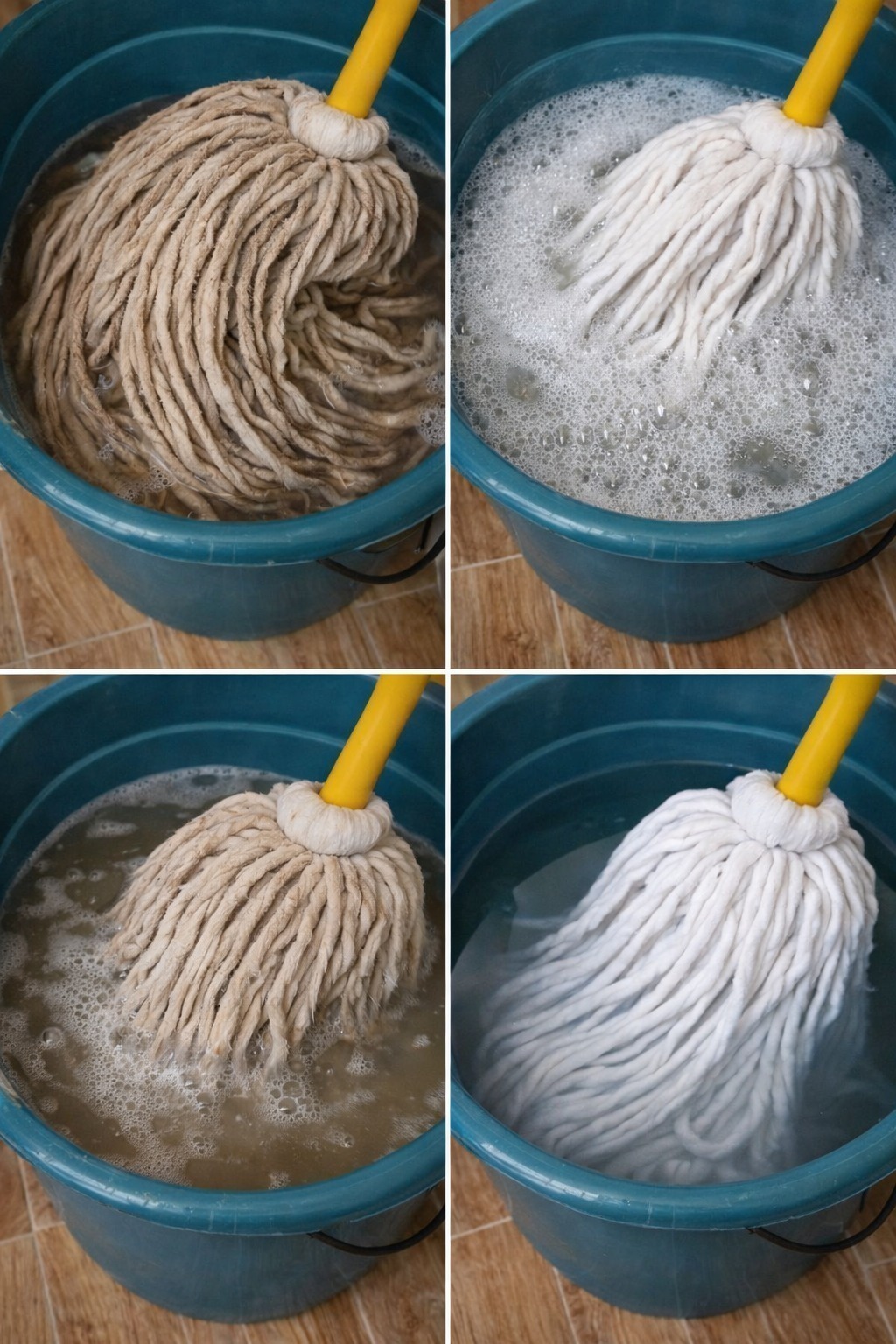
1. Baking Soda Soak (Best for Odor & General Grime)Cleaning Services
→ Fill a bucket with warm water
→ Add ½ cup baking soda; stir to dissolve
→ Submerge mop head for 2–3 hours