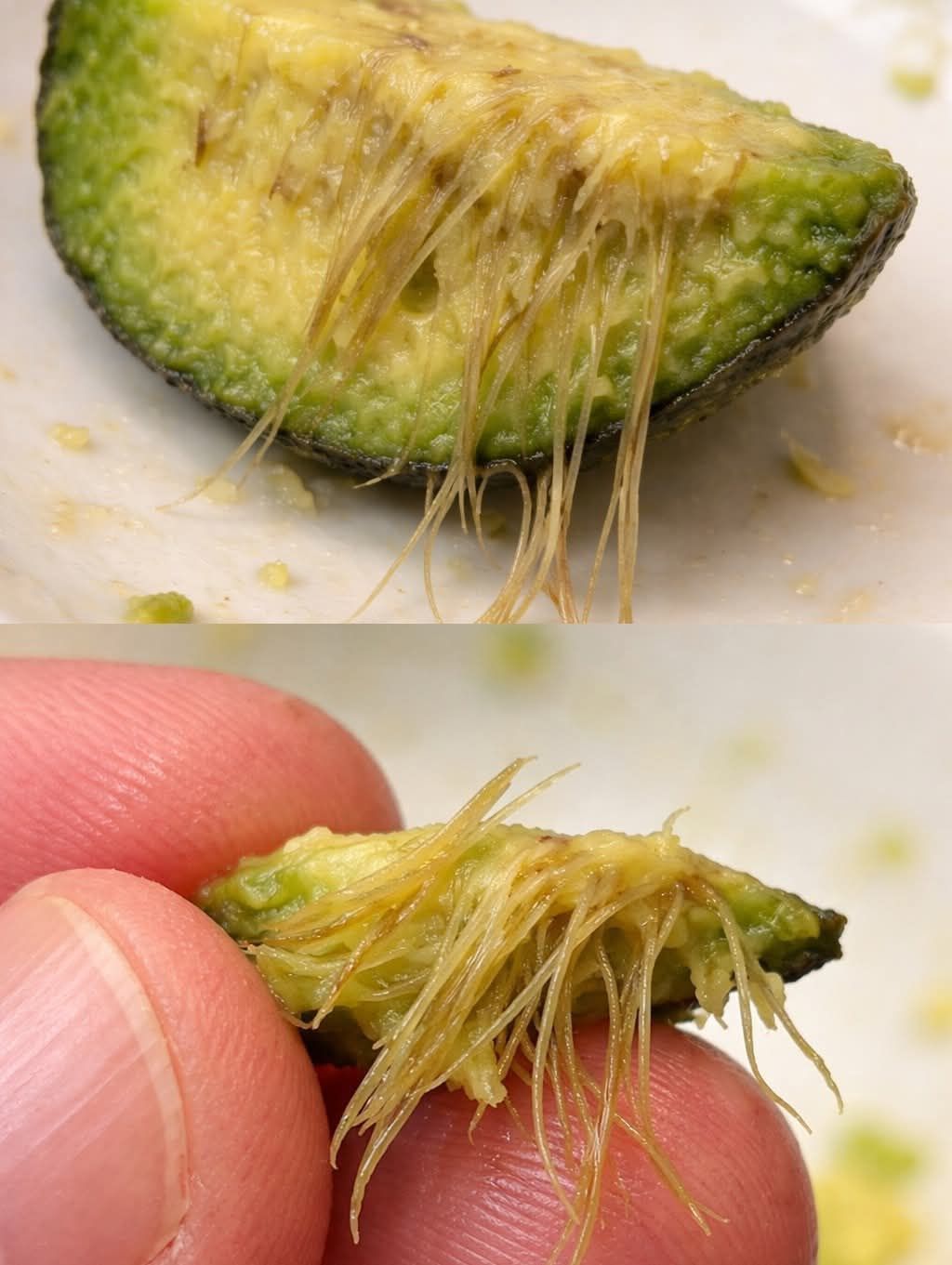
I learned that environmental stressors that occur during the growth period of the tree can directly impact the texture of the avocado. Stressors such as heat stress, uneven irrigation or nutritional deficiencies can cause the tree to create fruit that has a more noticeable amount of fibers. This will typically cause the internal tissue of the fruit to become a bit firmer. Ultimately, it can cause a ‘stringy’ texture of the fruit.
At least in my experience, the fact that the avocado looks perfectly fine until you cut into it makes it impossible to detect the potential for a stringy texture from the exterior of the fruit.
Timing of Harvest
Another reason why avocados may turn stringy is related to the timing of when the fruit is harvested. Typically, avocados are harvested prior to being fully ripe. Then the fruit will continue to ripen and become softer after harvesting.
If the fruit is harvested a little too early, the internal fibers may become apparent once the fruit continues to ripen. On the other hand, if the fruit remains on the tree for a longer time, the fruit will generally become softer and have a creamier texture.
While the consumer can’t control the timing of harvest, this will explain why two avocado fruits that look virtually the same will have vastly different textures internally.
Variety of Avocado
As previously mentioned, different varieties of avocados have varying degrees of textures. Hass avocados, which are the most widely available in supermarkets, are known for their creamy interior texture and low fiber content.
Although I’ve still experienced the occasional stringy Hass avocado, some varieties of avocados (especially local varieties) are naturally more fibrous.
Thus, in many instances, the difference in texture is purely a function of the variety of avocado purchased.
Over Ripening
Lastly, overripe avocados can contribute to making fibers more evident. As the fruit continues to ripen, the surrounding flesh begins to disintegrate.