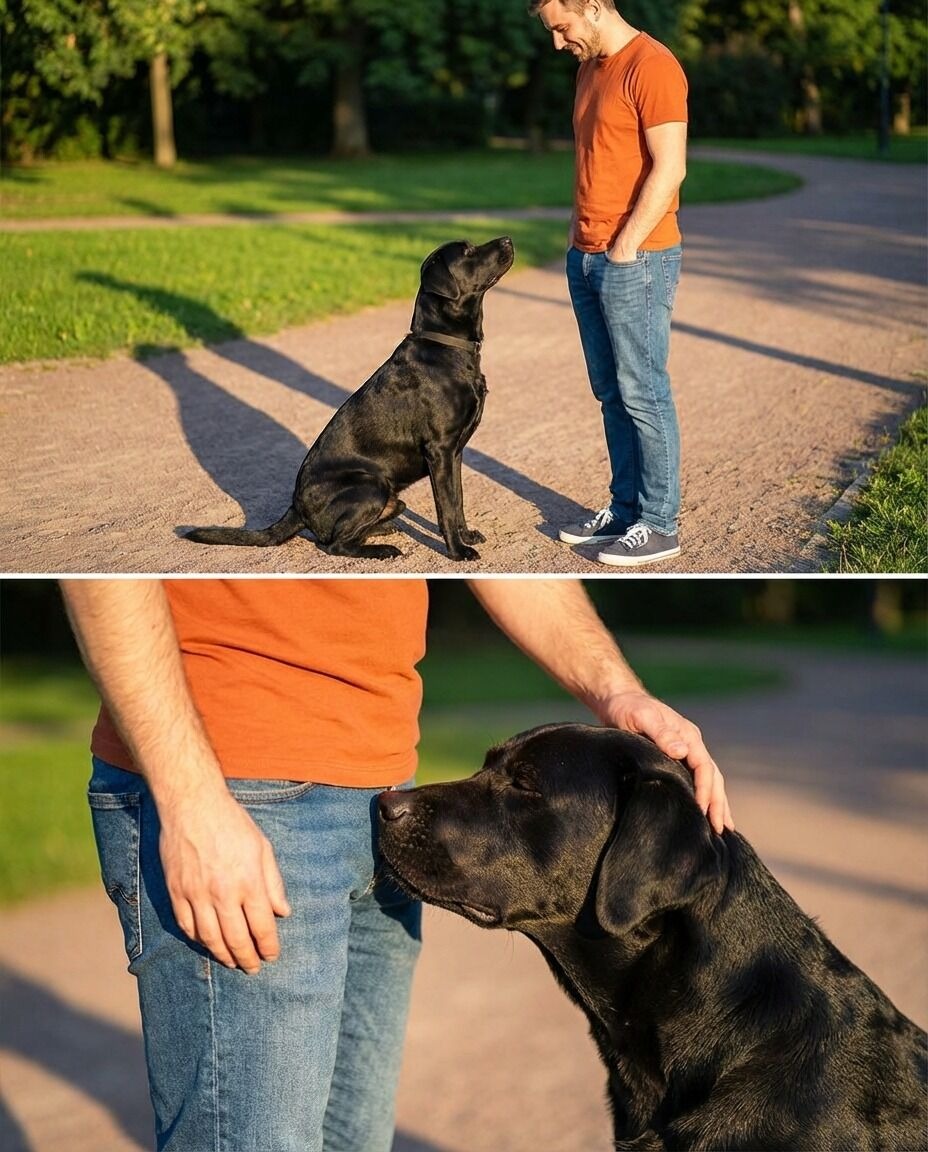
of apocrine sweat glands. Unlike eccrine glands, which produce watery sweat to cool the body, apocrine glands release pheromones—chemical signals that act like a personal ID card. These scents reveal age, sex, mood, and even health changes. Concentrated in the regions dogs target, they provide a “profile” of the person. Where humans scan faces for social cues, dogs scan chemistry with their noses.
That nose is a marvel. Dogs have up to 300 million olfactory receptors, compared to our six million, and the part of their brain devoted to smell is proportionally 40 times larger than ours. When they sniff, they’re not just detecting odor—they’re reading a timeline of where you’ve been, what you’ve eaten, and how you feel. The Jacobson’s organ, tucked in the roof of the mouth, even lets them “taste” these chemical signals.
In canine society, sniffing is a greeting, the equivalent of a handshake. By collecting this chemical information, dogs reduce uncertainty and feel more secure. A dog allowed to sniff within reasonable boundaries is often