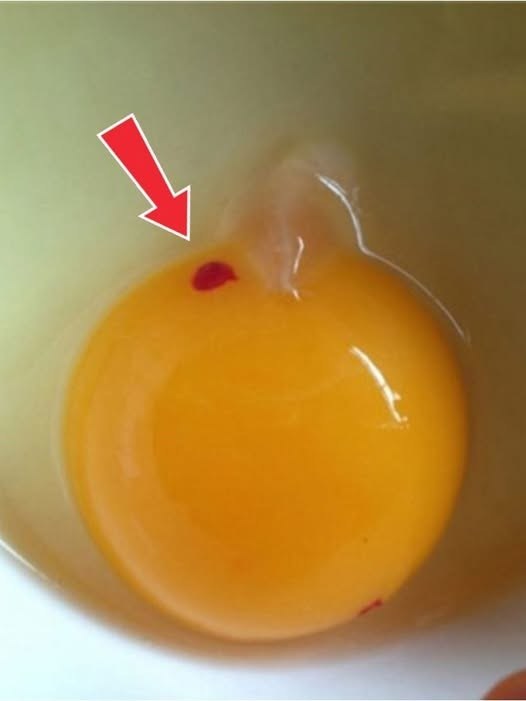
How Common Are These Red Spots?
Fewer than one in a hundred eggs contains a noticeable red spot. This is particularly true for eggs sold in grocery stores, where most undergo a rigorous grading process called candling.
During candling, eggs pass over a bright light that allows inspectors to see inside the shell. Eggs with visible spots or imperfections are typically removed from the cartons destined for retail shelves. This sorting process is not about safety, but about appearance. Most shoppers prefer eggs that look clean and consistent, so stores simply avoid stocking eggs with visible spots.
Farm-fresh eggs are a different story. Because they are usually not graded or candled, these natural markings are more likely to appear. Brown-shelled eggs may also show spots more often, as the darker shell makes the spots harder to detect during inspection.
Why Do These Spots Form?
see continuation on the next pageA common myth is that a red spot means the egg was fertilized. This is incorrect. The spot is simply the result of a tiny blood vessel rupturing inside the hen's reproductive system. This can happen for many normal reasons and does not affect the egg's quality or its ability to be eaten.