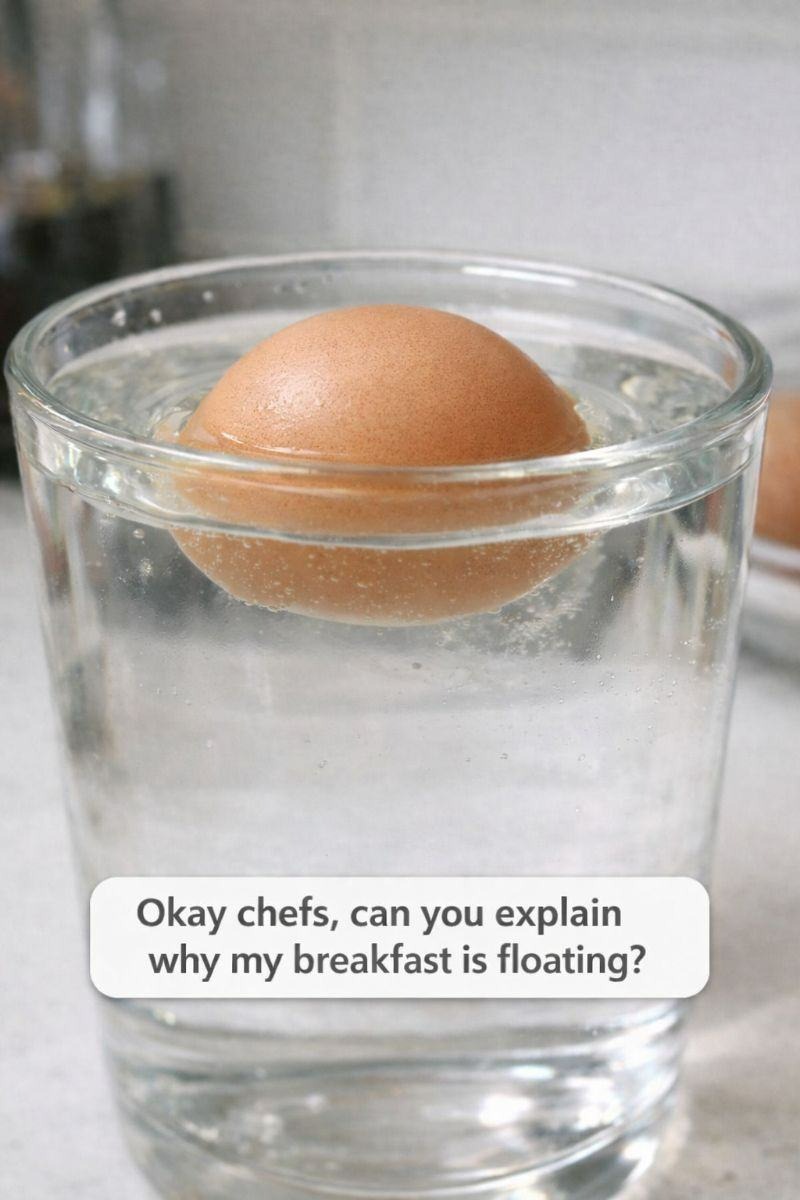
Eggs are marvels of natural engineering, consisting of a shell, a membrane, and contents that are primarily water and proteins. Inside the egg, there’s a small air cell that forms as soon as the egg is laid. Over time, moisture and carbon dioxide inside the egg evaporate through the shell’s pores, causing the air cell to enlarge. This increase in the air cell’s size decreases the egg’s overall density, causing it to become buoyant.The principle of buoyancy explains why older eggs tend to float. The larger the air cell, the higher the likelihood of the egg rising to the surface when placed in water. This natural process is a key indicator of an egg’s age, providing a tangible way to assess freshness without breaking the shell.
3. Fresh, Older, Or Rotten? How To Read An Egg’s Position In Water
An egg’s position in water can provide a snapshot of its freshness. Fresh eggs will lie flat on the bottom of the bowl, while slightly older eggs may tilt upwards or stand on one end. This standing position indicates a moderate enlargement of the air cell, signifying an egg that is still safe but should be used soon.
Floating eggs are generally considered spoiled or at the very least, very old. The large air cell inside a floating egg indicates significant moisture loss, and it is best to err on the side of caution and discard such eggs. Keep in mind that while the float test is a helpful guide, it should be accompanied by other sensory checks to ensure safety.
4. When Floating Is Fine: Situations Where Your Egg May Still Be Safe