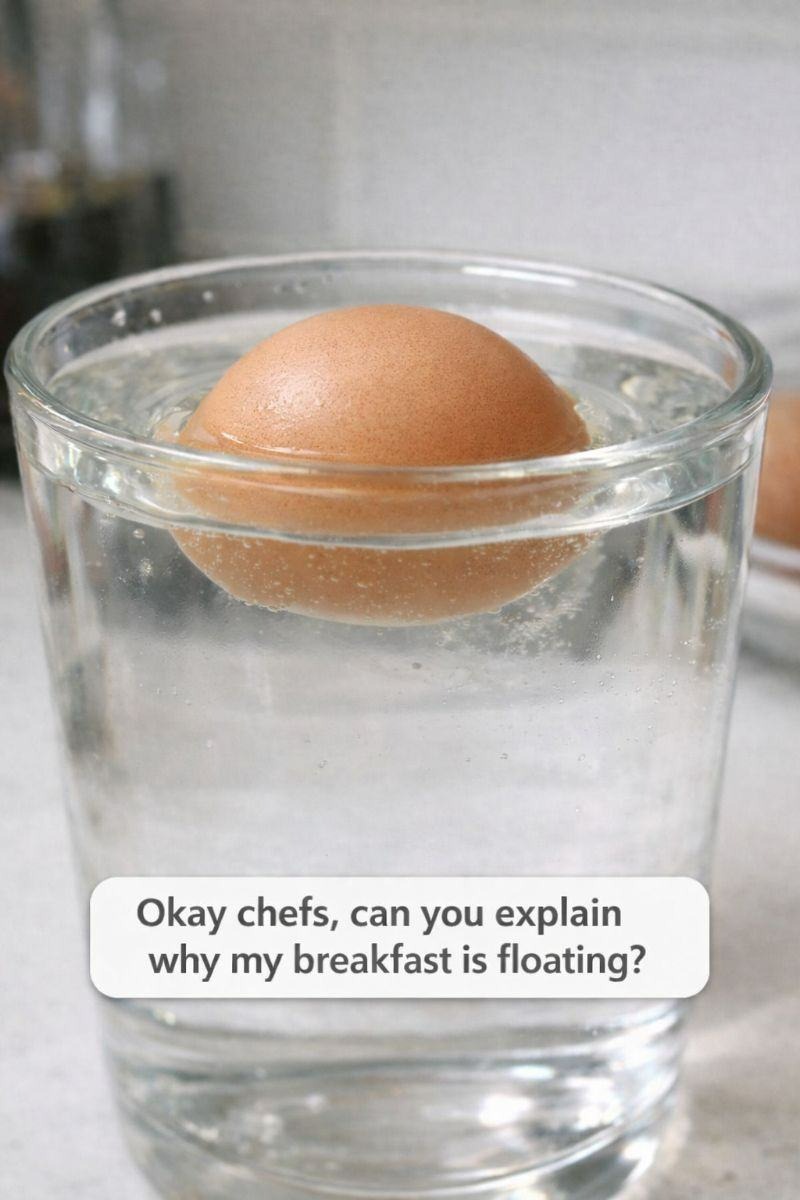
In certain scenarios, a floating egg may still be safe to consume. For example, a slightly floating egg that remains submerged in water but does not reach the surface may still be good for cooking. These eggs are often ideal for hard boiling, where the egg’s texture and flavor are less impacted by its age.
It’s important to combine the float test with other checks, such as cracking the egg open and examining its smell and appearance. If an egg passes these additional checks despite floating, it can be used in dishes where eggs are thoroughly cooked, minimizing the risk of any potential foodborne illness.5. The Red Flags: Smell, Color, And Texture Checks After The Float Test
Once an egg has undergone the float test, further examination is crucial to confirm its edibility. Cracking the egg open onto a clean surface can reveal much about its quality. A fresh egg will have a bright, slightly domed yolk and a thick, cloudy white. If the yolk is flat and the white is runny or watery, the egg is likely old.
The smell is another critical indicator. A bad egg will emit a distinct sulfuric odor, which is unmistakably foul. If there’s any doubt after these sensory checks, it’s best to discard the egg. Ensuring that eggs are safe to consume is paramount, and these simple checks are easy to integrate into your kitchen routine.
6. Fridge Habits That Quietly Turn Good Eggs Into Floaters
Improper storage can accelerate the aging process of eggs, turning fresh eggs into floaters prematurely. Eggs should be stored in the coldest part of the refrigerator, ideally at temperatures below 40°F (4°C). The refrigerator door is not an ideal spot, as it experiences frequent temperature fluctuations.
Another key practice is to store eggs in their original carton. The carton helps protect eggs from absorbing strong odors and flavors from other foods in the fridge, which can affect their quality. Additionally, keeping eggs in the carton helps maintain their moisture and slows down the enlargement of the air cell.