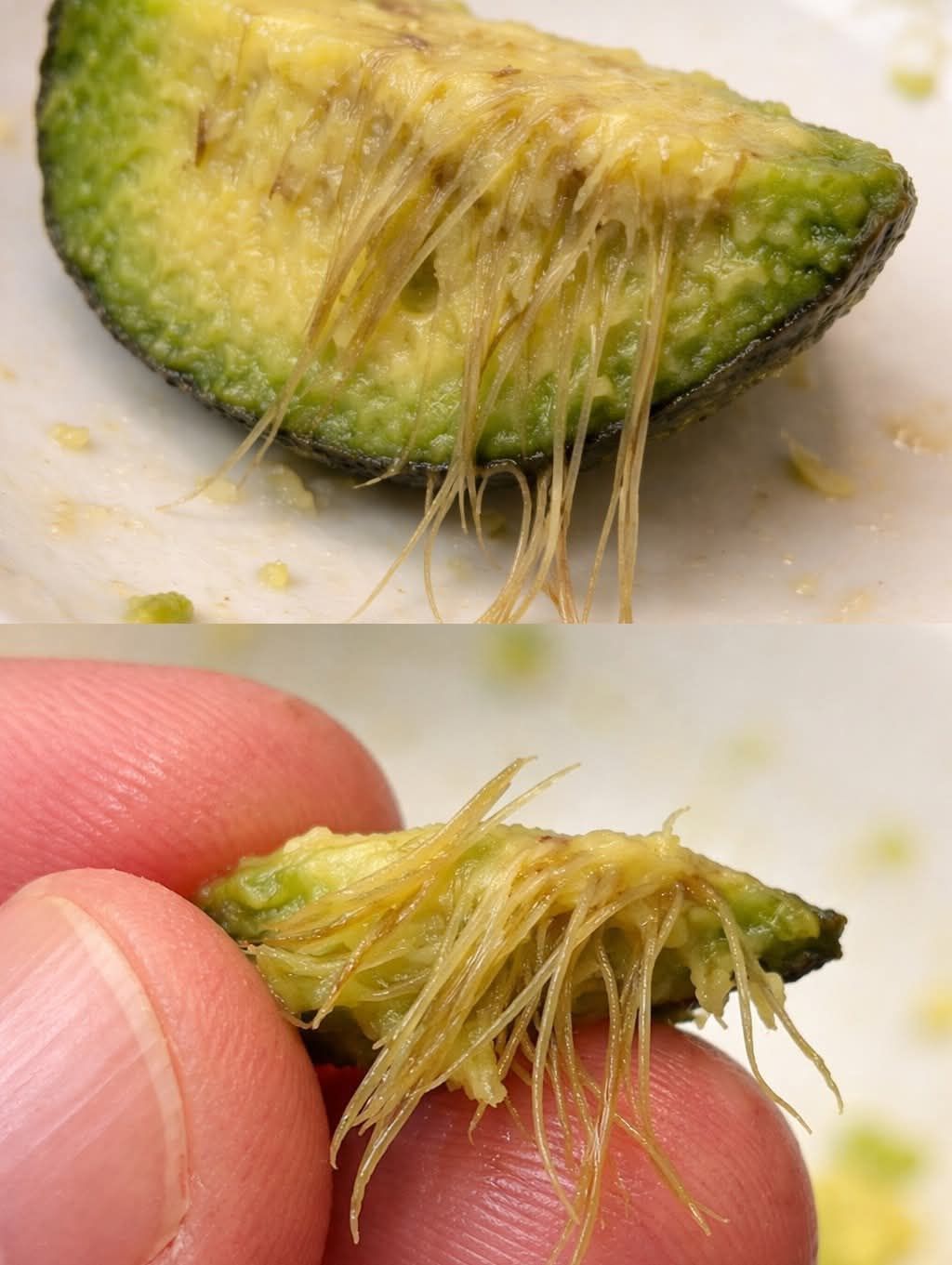
Those strands are essentially vascular bundles, which are internal structures found in fruits. They are used to carry water and nutrients to support the development of the fruit while it’s on the tree. All avocados have them. However, they are usually soft enough that you cannot distinguish them from the rest of the flesh of the fruit.
avocadoes
There are times when they become visible and slightly firmer than usual. This causes the fruit to develop what most people refer to as the ‘fibrous’ texture of the avocado. I can liken this a bit to the thin strings in celery, and even mangoes.
It’s worth noting that the fibers within the avocado are completely natural. They are merely part of the internal structure of the fruit and not pests, parasites or otherwise unsafe.
Why Do Some Avocados Become Stringy?
I learned that environmental stressors that occur during the growth period of the tree can directly impact the texture of the avocado. Stressors such as heat stress, uneven irrigation or nutritional deficiencies can cause the tree to create fruit that has a more noticeable amount of fibers. This will typically cause the internal tissue of the fruit to become a bit firmer. Ultimately, it can cause a ‘stringy’ texture of the fruit.
At least in my experience, the fact that the avocado looks perfectly fine until you cut into it makes it impossible to detect the potential for a stringy texture from the exterior of the fruit.
Timing of Harvest
Another reason why avocados may turn stringy is related to the timing of when the fruit is harvested. Typically, avocados are harvested prior to being fully ripe. Then the fruit will continue to ripen and become softer after harvesting.
If the fruit is harvested a little too early, the internal fibers may become apparent once the fruit continues to ripen. On the other hand, if the fruit remains on the tree for a longer time, the fruit will generally become softer and have a creamier texture.