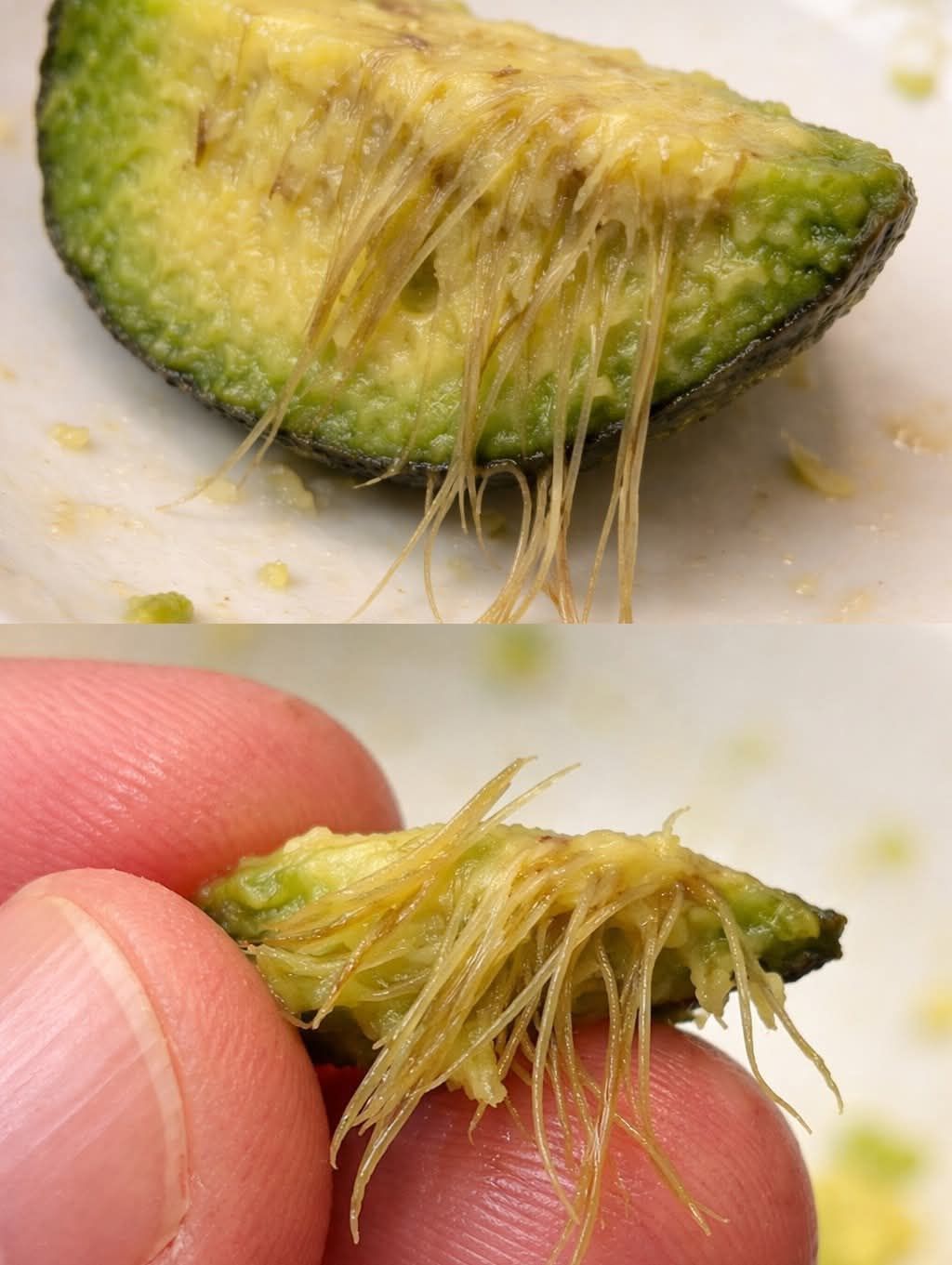
While the consumer can’t control the timing of harvest, this will explain why two avocado fruits that look virtually the same will have vastly different textures internally.
Variety of Avocado
As previously mentioned, different varieties of avocados have varying degrees of textures. Hass avocados, which are the most widely available in supermarkets, are known for their creamy interior texture and low fiber content.
Although I’ve still experienced the occasional stringy Hass avocado, some varieties of avocados (especially local varieties) are naturally more fibrous.
Thus, in many instances, the difference in texture is purely a function of the variety of avocado purchased.
Over Ripening
Lastly, overripe avocados can contribute to making fibers more evident. As the fruit continues to ripen, the surrounding flesh begins to disintegrate.
Fibers do not magically materialize, but when the majority of the flesh is extremely soft, the fibers become more noticeable. I’ve seen this particularly when an avocado has been left sitting on the counter for longer than anticipated.
Therefore, over-ripening does not create the fibers, but it certainly makes them more visible.
avocado cut in half
Are Stringy Avocados Safe to Consume?
One of the first questions I asked myself was: “are stringy avocados safe to eat?” Fortunately, the answer is, “yes”, in most cases.
Fibers are merely plant tissue, and therefore do not represent any health risks. The primary concern with a stringy avocado is the texture. A stringy avocado will not provide you with the silky smooth guacamole that you were anticipating. However, it is still edible.