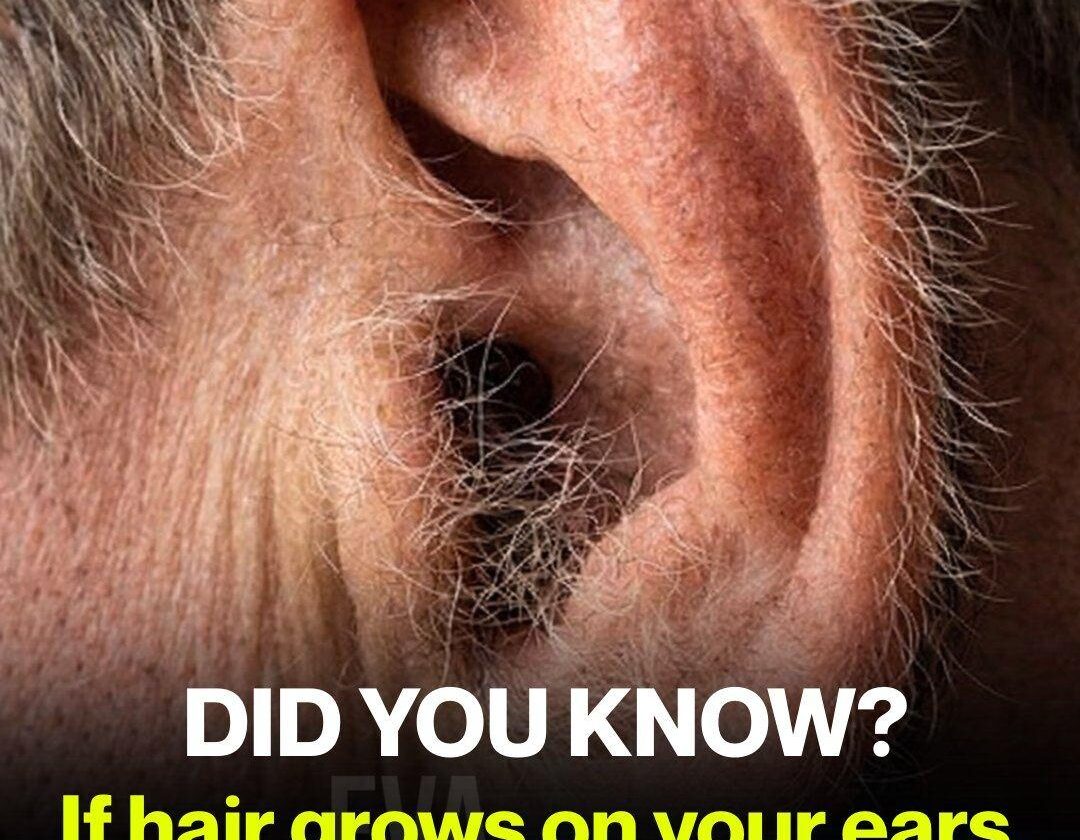
Why It Happens: The Biology Behind the Bristles
The old joke that “hair migrates from your head to your ears and nose” isn’t entirely wrong. While hair doesn’t literally relocate, aging does shift how and where it grows—thanks to hormonal changes and genetic programming.
1. The Testosterone Effect
The main driver? Androgens, particularly testosterone. As we age, hair follicles in certain areas—like the scalp—become more sensitive to these hormones, leading to thinning or baldness. But in other zones—ears, nose, eyebrows—the same hormonal signals have the opposite effect: they stimulate growth, turning fine, nearly invisible vellus hairs into darker, coarser strands.
2. Longer Growth Cycles
Aging alters the natural rhythm of hair follicles. Instead of shedding regularly, ear hairs stay in their growth phase longer, resulting in thicker, wirier, and more noticeable tufts.