3. Thinner Skin, Greater Visibility
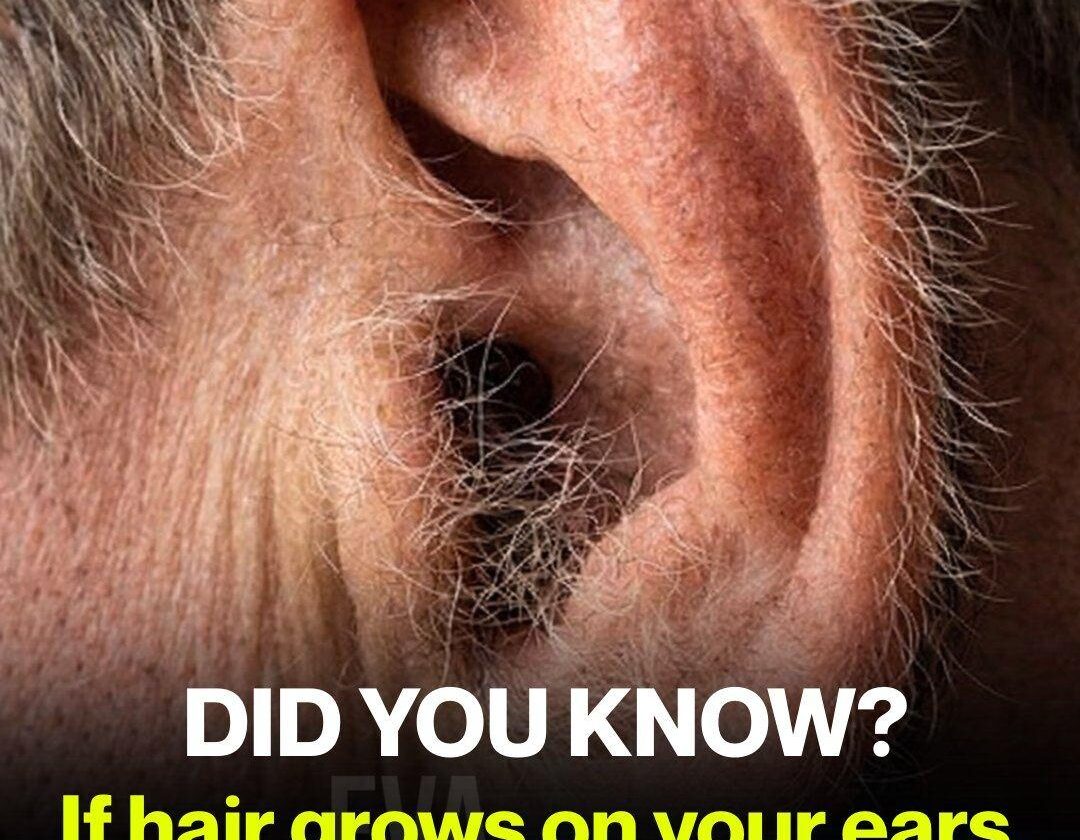
As skin loses elasticity and thins with age, even modest hair becomes more prominent against the surface of the ear—making it seem like there’s more than there actually is.
4. Genetics Rule
If your father or grandfather had prominent ear hair, chances are you will too. Your DNA determines not only your follicle sensitivity to hormones but also the precise “map” of where hair thrives. This isn’t about hygiene or lifestyle—it’s inheritance written in your genes.
What Ear Hair Might Say About Your Health
In most cases, ear hair is completely harmless—a normal part of aging. But occasionally, it can serve as a gentle nudge from your body:
Sudden, dramatic growth—especially if paired with fatigue, mood swings, or other unexplained symptoms—could signal a significant shift in androgen levels. While rare, it’s worth mentioning to your doctor.
The Heart Disease Myth: You may have heard of “Frank’s Sign” (a diagonal crease in the earlobe) or claims linking ear hair to cardiovascular risk. Some older studies explored these ideas, but current medical consensus considers the evidence inconclusive. Ear hair alone is not a diagnostic tool for heart health—but it does remind us that our external features often reflect internal processes.
Managing Ear Hair: Smart Practices
✅ Do: